Embroidery Flowers Seamless Pattern Review
Setting up a booth for a weekend craft fair is equal parts excitement and anxiety. You want your table to scream quality, but you also need items that move quickly. As an experienced embroidery designer who has sold hundreds of handmade products at local markets, I know that the difference between a slow Saturday and a sold-out Sunday often comes down to the design itself. Today, I am reviewing the Embroidery Flowers Seamless Pattern, a digital asset available via Creative Fabrica, to see if it has what it takes to become a bestseller in your small shop.
First Impressions: The Visual Impact
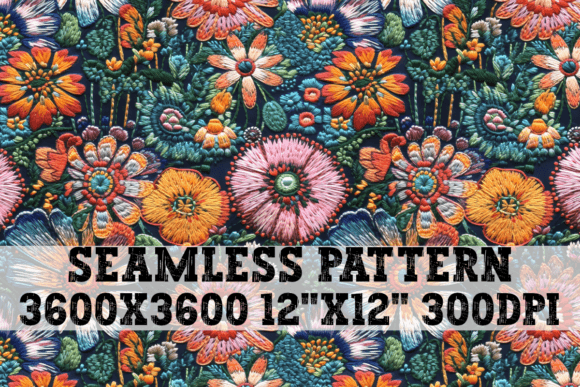
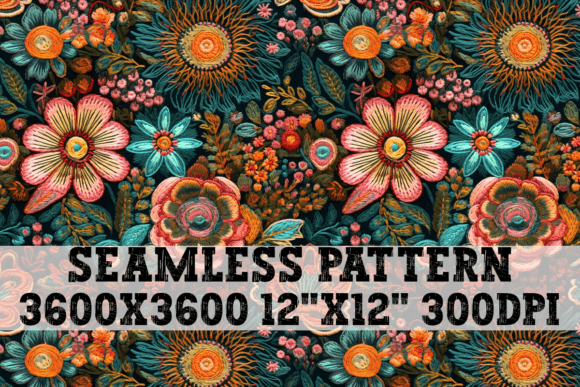
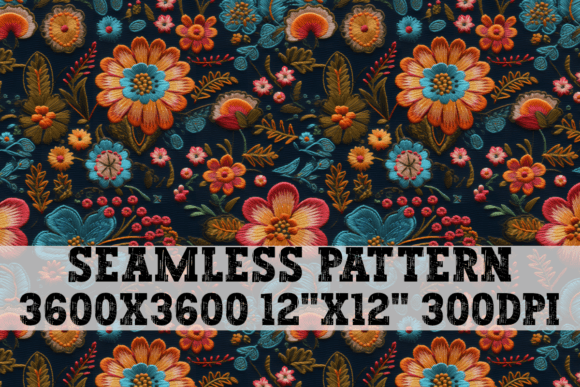
When I first pulled up the preview for this embroidery file, my immediate thought was about versatility. The title suggests a floral theme, which is a staple in the handmade world, but the "seamless" aspect changes everything. Unlike a single centered motif that feels static, a seamless pattern creates movement. It feels decorative, soft, and inherently premium. For a craft fair seller, this is crucial because customers gravitate toward items that look professionally finished rather than amateurishly stitched.
The pattern is delivered as a tileable repeat in .PNG format at 300 dpi, with dimensions of 3600×3600 pixels (12″ x 12″). This high resolution means that when you use it to create printable mockups or plan your layout, the details remain crisp. Visually, it strikes a balance between modern and rustic. It isn’t overly busy, which keeps it accessible, yet it has enough detail to feel substantial. This makes it perfect for creating a cohesive brand look across multiple product types.
Product Potential: Where This Design Shines
In my experience, not every machine embroidery design works on every item. Some designs are too dense for delicate fabrics, while others lack the presence needed for larger surfaces. The Embroidery Flowers Seamless Pattern is particularly strong on specific craft fair products.
- Tote Bags: A canvas tote is the quintessential market item. Applying a seamless floral pattern across the front panel or along the side gussets adds instant value. It transforms a plain $5 bag into a $25 boutique accessory. The pattern’s continuity ensures that no matter how the bag is folded or handled, the design remains intact.
- Apron Embroidery: Kitchen aprons are impulse buys. A seamless pattern applied to the bib or the skirt of the apron offers a sophisticated alternative to a single logo. It feels like a curated home good, appealing to buyers who love cooking and entertaining.
- Tea Towel Embroidery: This is a high-volume, lower-price-point item. Because the pattern is tileable, you can fit more repeats onto a standard tea towel without wasting fabric. It photographs beautifully for Etsy listings and online shops, catching the eye in thumbnail images.
- Embellished Patches and Caps: While a full seam might be too large for a cap front, using a segment of this pattern as a border or a background texture for a patch can elevate the piece. However, caution is advised here regarding scale (see below).
- Pillow Covers and Market Bags: These larger surface areas allow the pattern to breathe. Customers love seeing a design that covers significant real estate, as it feels more luxurious and complete.
Production Practicality and Batch Efficiency
One of the biggest challenges for a solo maker is production speed. If a design takes 45 minutes to stitch, your profit margins shrink. Seamless patterns offer a unique advantage in batch production. Once you digitize or set up the repeat correctly, you can fill large hoop areas efficiently. There is minimal start-and-stop threading compared to scattered motifs, provided your software handles the tiling well.
This digital embroidery file allows for easy scaling. Whether you are making a tiny pouch or a large duvet cover, the pattern adjusts proportionally. This consistency is vital for brand consistency. Your customers should recognize your work by the style alone, even if they don’t see your logo. The seamless nature of the Embroidery Flowers Seamless Pattern helps achieve that uniform, professional aesthetic.
Critical Considerations for Stitching Success
While the visual appeal is high, we must address the technical realities of embroidery. Not all floral patterns are created equal, and some common pitfalls can ruin a finished product.
Stitch Density and Detail
You must inspect the stitch density carefully. Floral patterns can sometimes suffer from "mushiness" if the petals are too close together or if the underlay is excessive. Before committing to a full run of tote bag designs, test the pattern on scrap fabric. Look for areas where the thread might pucker or where the fabric texture is obscured. If the design relies on tiny, isolated stitches, it may lose clarity when embroidered on textured towels or thick denim.
Fabric and Color Contrast
The success of any embroidery design depends heavily on thread colors and base fabric. A light pastel floral pattern might disappear on white cotton but pop beautifully on navy or sage green. Always compare your thread colors against your actual inventory. Dark fabrics require bright, saturated threads to maintain the integrity of the pattern. Conversely, on light fabrics, ensure the pattern doesn’t look washed out.
Scale and Hoop Size
The source file is a 12″ x 12″ image. When converting this to an embroidery file, you need to confirm the hoop size limitations of your machine. If your machine only has a 4″ x 4″ hoop, you will need to split the pattern or resize it significantly. Resizing too much can cause pixelation in the original PNG if not handled correctly during the digitizing process. Ensure the final stitched size retains enough detail to be recognizable from a foot away—crucial for craft fair visibility.
Stabilizer Selection
Seamless patterns often cover large areas, which increases the risk of shifting. Use the right stabilizer for your fabric type. Cut-away stabilizers are generally recommended for stretchy materials like jersey caps or lightweight tees, while tear-away may suffice for stable cottons. Proper stabilization ensures the pattern remains aligned and doesn’t distort during the long stitching process.
Selling Strategy and Customer Appeal
From a marketing perspective, the Embroidery Flowers Seamless Pattern is a powerhouse. It appeals to the "farmhouse," "modern botanical," and "minimalist" aesthetics simultaneously, broadening your potential customer base. When displaying these items at a booth, group them together. A stack of matching tea towels next to a hanging apron and a tote bag creates a "lifestyle" vignette. Buyers imagine themselves using these items in their homes, which drives sales.
For Etsy sellers and online merchants, this pattern is ideal for creating diverse listings. You can offer the same design on different products, allowing customers to choose their preferred medium. This cross-selling opportunity increases average order value. Furthermore, the high-resolution PNG allows you to create stunning printable mockups for your website before you even stitch the first sample, saving time and material costs.
Final Verdict
The Embroidery Flowers Seamless Pattern is a strong candidate for any serious handmade business looking to expand its catalog. Its versatility, visual appeal, and suitability for batch production make it a smart investment. However, success lies in the execution. Test thoroughly, pay attention to stitch density, choose complementary fabrics, and always confirm your commercial licensing terms before selling finished goods.
If you treat this design with the care it deserves—testing on scraps, checking thread contrast, and ensuring proper stabilization—you will have a line of handmade products that stand out in a crowded market. It’s not just a flower; it’s a foundation for a cohesive, profitable collection. For the craft fair seller ready to elevate their booth, this seamless pattern is a reliable ally.