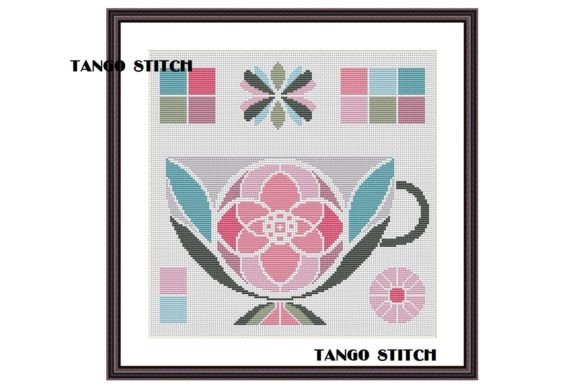
Flower Cup Cross Stitch Hand Embroidery
As an embroidery designer who spends countless hours digitizing, testing, and refining designs for commercial clients, I approach every new asset with a critical eye. When I first encountered Flower Cup Cross Stitch Hand Embroidery, my initial reaction was one of cautious optimism. The product description highlights it as a "cute pink floral cup kitchen cross stitch embroidery pattern" from Tango Stitch, aimed at the beginner stitcher. However, in the world of small business merchandise, "beginner-friendly" does not automatically translate to "commercially viable." We need to look past the adorable aesthetic and evaluate the structural integrity, scalability, and brand potential of this design.
First Impressions: Aesthetic vs. Commercial Viability
The visual personality of Flower Cup Cross Stitch Hand Embroidery is undeniably warm, playful, and inviting. The combination of a floral motif with a cup element suggests themes of coffee culture, baking, hospitality, or cozy home goods. For a boutique café, a handmade bakery, or a florist shop, this design immediately communicates friendliness and attention to detail. It feels handmade and premium, which are key drivers in today’s market where consumers value authenticity over mass-produced uniformity.
However, the "cross stitch" style presents unique challenges for machine embroidery. True cross stitch relies on specific X-shaped stitches that can be time-consuming and bulky if not digitized correctly. If this is marketed as a machine embroidery design, the digitizer must simulate the look of hand cross stitch while maintaining reasonable stitch density. If the design is too dense, it may become stiff and uncomfortable on apparel. If it is too sparse, it may lack the visual impact needed for a branded patch. The vibrant pink tones described suggest a high-contrast look, which is excellent for visibility but requires careful thread selection to avoid looking garish on darker fabrics.
Real-World Applications for Small Business Merch
Where does Flower Cup Cross Stitch Hand Embroidery shine in a retail environment? Its versatility makes it a strong candidate for several key merchandise categories:
- Embroidered Patches: This design has the potential to work beautifully as a sew-on or iron-on patch. The circular or contained nature of a "cup" motif lends itself well to patch boundaries. For a local coffee roaster or tea shop, a floral cup patch on a denim jacket or canvas tote bag creates an instant brand identity.
- Apron Embroidery: For bakeries, culinary schools, or cooking instructors, placing this design on the chest pocket of a white or natural linen apron adds a touch of charm without overwhelming the garment. It signals warmth and hospitality to customers.
- Cap Embroidery: The compact size of many floral cup designs often fits within standard 3x3 inch hoop limits. As a cap embroidery piece, it can serve as a subtle logo accent on the front panel or side of a hat, appealing to younger demographics who prefer understated branding.
- Tote Bag Design: Canvas totes are a staple for small business merch. The contrast between the rough texture of canvas and the smooth, detailed stitches of Flower Cup Cross Stitch Hand Embroidery creates a pleasing tactile experience. This is ideal for craft fair vendors, Etsy sellers, and event giveaways.
- Staff Uniforms: For small teams in boutiques or cafes, consistent branding builds professionalism. Using this design as a uniform accent (perhaps on a sleeve cuff or back neck) humanizes the staff and makes the brand feel more approachable.
Critical Considerations for Production
Before committing to production runs, there are several technical pitfalls that can ruin a good design. As a professional, I urge you to scrutinize the following aspects of this digital embroidery file:
- Stitch Density and Fabric Texture: Cross stitch simulations can be heavy on thread usage. Ensure the underlying fabric can support the weight of the stitches without puckering. On lightweight tees or thin poly-blends, the stabilizer choice becomes critical. You may need a cut-away stabilizer to prevent distortion during frequent washing.
- Small Patch Sizes: If you plan to scale this down for small applications, test it rigorously. Fine details in the petals or the rim of the cup may disappear or merge into a blob when stitched below a certain diameter. Always create a printable mockup at actual size before running a production batch.
- Thread Color Contrast: The description mentions "vibrant pink," but how does this contrast against your target fabric? On dark uniforms, you will need a thick underlay or a lighter base thread to ensure the pink pops. Conversely, on light fabrics, ensure the pink isn’t so pale that it blends in. Inspect the spacing between colors to avoid muddy transitions.
- Hoop Size Constraints: Verify the maximum dimensions of the design. If it exceeds standard hoop sizes, it may require multi-hooping, which introduces registration errors and visible jump stitches. Confirm the hoop size requirements with the provider.
Impact on Brand Identity and Customer Trust
In the age of digital saturation, physical touches like embroidery carry significant weight. A well-executed embroidered patch featuring Flower Cup Cross Stitch Hand Embroidery tells a story of care and craftsmanship. It suggests that the business owner cares about the quality of their products enough to invest in custom branding. This directly influences customer trust and perceived value.
For Etsy sellers and handmade brands, consistency is key. Does this design align with your existing design assets? If your brand is minimalist and modern, a busy cross-stitch floral might feel out of place. However, if your brand leans towards rustic, vintage, or cottage-core aesthetics, this design is a perfect fit. It enhances the narrative of your handmade product, making it feel less like a commodity and more like a keepsake.
Practical Designer Notes for Final Approval
Before purchasing or using this file for commercial embroidery projects, follow these steps to mitigate risk:
- Test in Black and White: Convert the design to grayscale to check the balance of negative space and stitch density. This helps identify areas that might be too cluttered.
- Confirm Commercial Licensing: The description provided does not explicitly state licensing terms. Ensure you have the right to use this embroidery file for selling finished goods. Personal use licenses are insufficient for business merchandise.
- Review Thread Colors: Do not rely solely on the digital preview. Order sample threads and stitch the design on your actual production fabric. Screen colors rarely match thread colors exactly.
- Check for Tiny Lettering: If the design includes any text (e.g., "Coffee," "Bakery"), ensure the font size is large enough to be legible after stitching. Small text often fails in machine embroidery due to thread breakage and lack of definition.
- Compare Beside Other Assets: Place the design next to your logo or other brand elements. Does it compete for attention, or does it complement them? The best branded merchandise uses embroidery to enhance, not distract from, the core brand message.
In conclusion, Flower Cup Cross Stitch Hand Embroidery holds promise for businesses seeking a charming, artisanal touch. While it may require some technical finesse regarding stitch density and fabric choice, its potential to elevate custom apparel and product packaging accents is significant. By treating it with the same rigorous testing standards as any high-end design asset, you can transform a simple cute pattern into a powerful tool for brand engagement and sales growth.